

- Guardian Goddesses of Ujjain
Chaubis Khamba Mata Mandir Ujjain
A historic Devi shrine in the old city, named after its 24 ornate pillars, where Mahamaya and Mahalaya guard the ancient gateway near Mahakaleshwar.
- About the Temple
The Gateway of Twenty-Four Pillars
Chaubis Khamba Mata Mandir is a historic Devi shrine and architectural landmark in the old city of Ujjain. “Chaubis Khamba” means “twenty-four pillars”, after the ornate pillars that give this ancient gateway its identity. It stands near Mahakaleshwar Temple, on the way to Patni Bazaar.
The entrance is flanked by images of two goddesses, Mahamaya Devi and Mahalaya Devi, revered as protective deities of Ujjain. The District Ujjain administration describes the 24 pillars and the two deity images, and also links the site with Devi Bhadrakali.
- Goddesses: Mahamaya Devi and Mahalaya Devi
- Location: old city, near Mahakaleshwar, towards Patni Bazaar
- Known for: 24 ornate pillars and the Navratri Nagar Puja
- At a Glance
Chaubis Khamba Mata Mandir at a Glance
Goddesses
Mahamaya Devi and Mahalaya Devi, guardian goddesses of Ujjain
Location
24 Gudri Chouraha, Jaisinghpura, old city, Ujjain 456006
Distance
A short walk from Mahakaleshwar, on the way to Patni Bazaar
Famous For
The gateway of 24 ornate pillars, dated to the 9th–10th century CE
Main Festival
Navratri, especially Maha Ashtami and the city’s Nagar Puja
Entry & Time
Entry is generally free. Allow 15–30 minutes
- Navratri Tradition
The Maha Ashtami Nagar Puja
Chaubis Khamba is the starting point of one of Ujjain’s oldest living rituals, the Nagar Puja (city worship). On the Maha Ashtami of Sharad Navratri, the Ujjain Collector and senior officials begin the ritual here by offering madira (liquor) bhog to Mahamaya and Mahalaya, the goddesses believed to protect the city.
A Nagar Puja party then follows a route of about 27 km through Devi and Bhairav temples across Ujjain, offering naivedya at each shrine and releasing a stream of liquor along the way. The district administration bears the expense. Local belief traces the custom to King Vikramaditya, who is said to have started it to protect the city from negative forces; a larger version is held during Simhastha.
Nagar Puja at a glance
- Held on Maha Ashtami of Sharad Navratri
- Begins at Chaubis Khamba with the Collector’s puja
- Madira bhog offered to Mahamaya and Mahalaya
- About 27 km route through Devi and Bhairav temples
- Traditionally traced to King Vikramaditya
- History & Architecture
History of Chaubis Khamba
The Ujjain District Administration describes the architectural design of the twenty-four ornate pillars as dating to the ninth or tenth century CE, which makes Chaubis Khamba an important surviving part of the city’s historic sacred landscape.
Some local traditions connect the gateway with the ancient sacred precinct of Mahakal Vana. These are cherished traditions rather than a fully documented history, and the original patron of the structure is not conclusively established.
When you visit, take time to look at the stonework, the pillar forms and the entrance composition, a rare example of the city’s early temple architecture. Please do not climb on, scratch or write on the pillars.
Key Points
24 ornate pillars
The arrangement of carved pillars gives the monument its popular name, and the entrance itself is the main attraction.
9th–10th century CE
The district administration dates the design of the pillars to this period.
Mahamaya & Mahalaya
Images of the two guardian goddesses flank the ancient gate, revered as protectors of Ujjain.
Devi Bhadrakali
The district administration also associates the site with Devi Bhadrakali.
- Plan Your Darshan
Darshan Timings
No confirmed daily timetable is published by the district administration, and listings differ. Use these for planning only.
Morning
Good time to visit
A comfortable time for an old-city walk.
Daily Puja
Morning & evening
Ask locally for exact aarti times.
Early Evening
Good time to visit
Combine with the Mahakal-area temples.
Navratri
Extended activity
Timings change on Navratri and Ashtami.
Navratri and Maha Ashtami bring large crowds and security arrangements to the old-city lanes. Plan extra time.
- What to Offer
What to Offer at Chaubis Khamba
Follow the priests’ guidance on offerings, which can vary on special days.
- Red chunri: traditional offering to the Goddess
- Coconut: surrender and auspicious prayer
- Red flowers or a garland: devotion to Maa
- Sindoor and a diya: traditional Shakti worship
- Incense: purity and reverence
- Sweets: bhog offered to the goddesses
- Book Your Puja
Plan Your Puja Seva in the Old City of Ujjain
Pt. Ravi Joshi and the Ujjain Puja Seva team arrange Vedic pujas such as Kaal Sarp Dosh Puja, Navgraha Shanti and Mangal Dosh Puja. Dakshina is confirmed before booking (₹501 – ₹51,000 depending on the puja).
- How to Reach
How to Reach Chaubis Khamba Mata Mandir
The temple is in the old city’s narrow lanes. Walking from a nearby drop-off point is usually easier than taking a car to the entrance.
From Mahakaleshwar
A short walk
On the way to Patni Bazaar.
From Ujjain Junction
About 2–3 km
Auto or taxi towards Gudri Chouraha.
From Patni Bazaar
A few minutes’ walk
Through the old-city lanes.
From Indore Airport
About 55 km to Ujjain
Taxi or bus to Ujjain, then local transport.
- Explore Sacred Ujjain
Old-City Temples Nearby
Chaubis Khamba fits naturally into a walking route with Mahakaleshwar, Bade Ganesh, Harsiddhi and Ram Ghat.
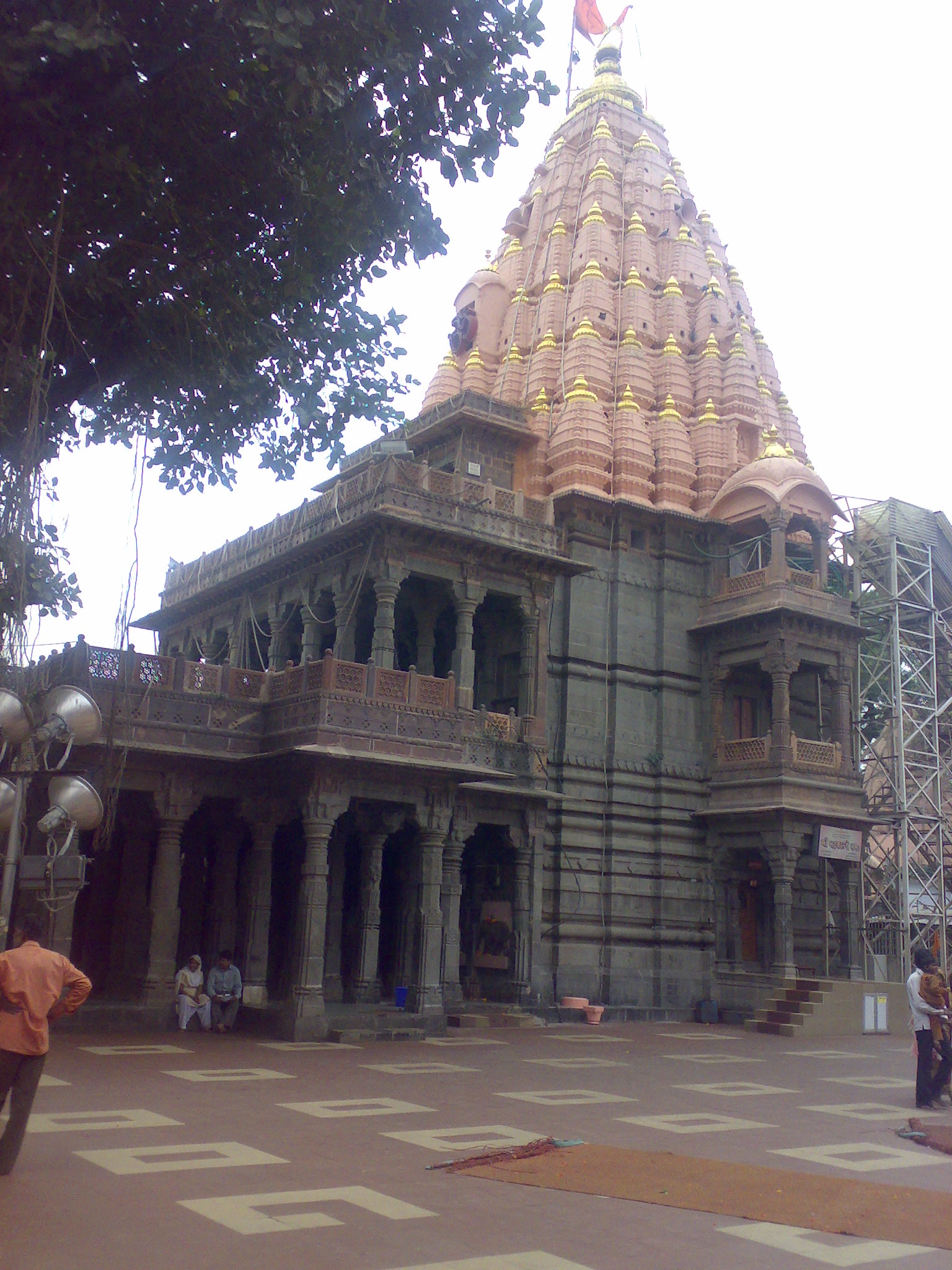
Mahakaleshwar Jyotirlinga
The heart of every Ujjain yatra and one of the twelve Jyotirlingas.

Bade Ganesh Ji Mandir
The large Ganesha temple right beside Mahakaleshwar.
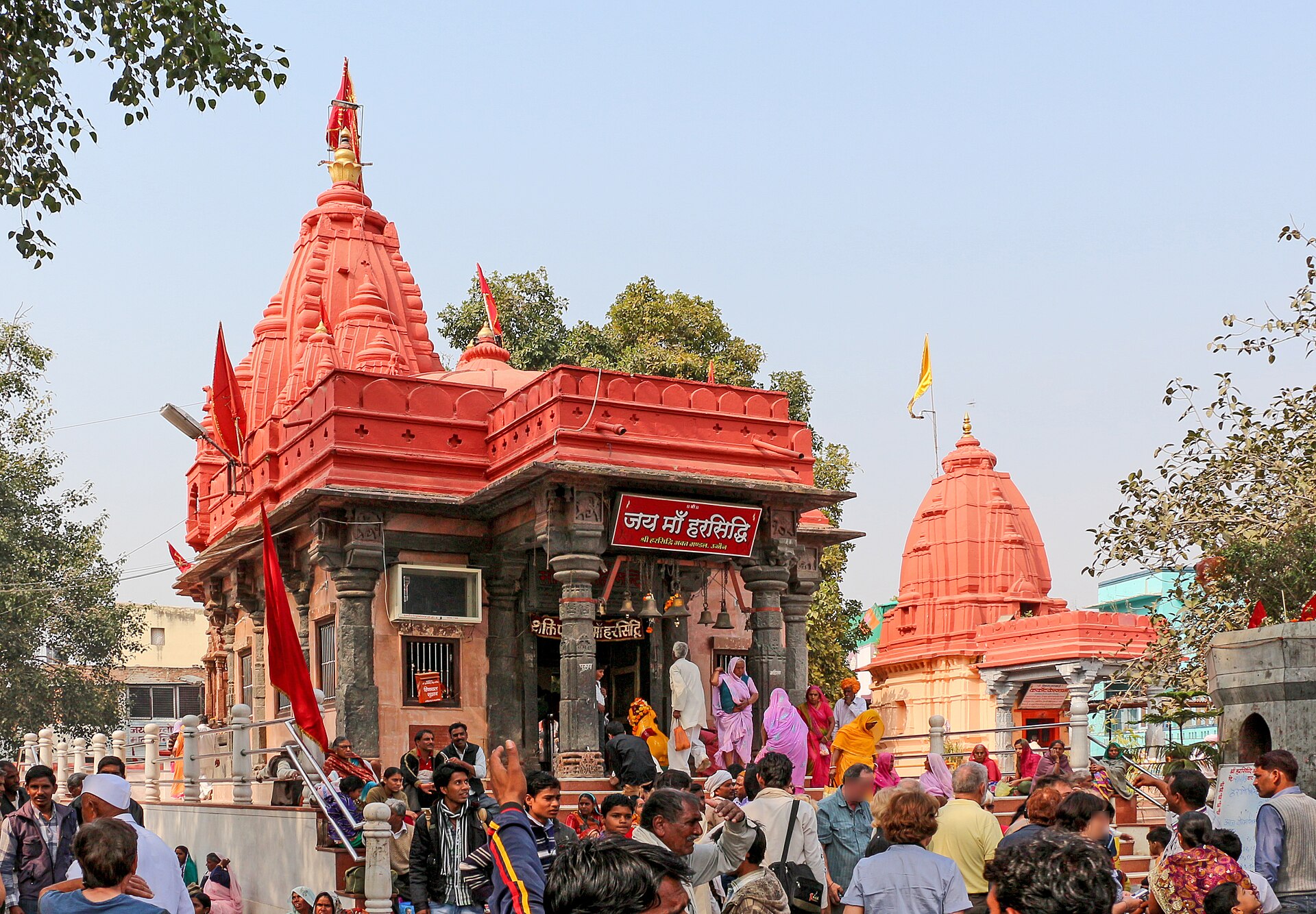
Harsiddhi Mata Mandir
A revered Shakti temple, a short walk from Mahakaleshwar.
Want a ready route? See our Ujjain temple tour itineraries for one-day and two-day plans.
- Before You Visit
Tips Before You Visit
- Wear comfortable footwear for the old-city lanes, and remove it where instructed.
- Carry drinking water, especially in summer.
- Do not climb on, touch or damage the historic pillars.
- Ask before photographing worshippers or rituals.
- Confirm timings locally on the day of your visit.
- FAQs
Chaubis Khamba Mata Mandir FAQs
Why is it called Chaubis Khamba Mandir?
The name means “twenty-four pillars”, after the ornate pillars of the historic gateway.
Which goddesses are worshipped here?
Mahamaya Devi and Mahalaya Devi, whose images flank the entrance and who are revered as guardians of Ujjain.
How old is the structure?
The Ujjain District Administration dates the design of the pillars to the ninth or tenth century CE.
What is the Nagar Puja?
On Maha Ashtami of Sharad Navratri, the Ujjain Collector begins the city’s Nagar Puja here by offering madira bhog to the two goddesses. The ritual then follows a route of about 27 km through Devi and Bhairav temples.
Where is the temple located?
In the old city of Ujjain, near Mahakaleshwar Temple, on the way to Patni Bazaar.
What are the darshan timings?
Public listings differ, and no official daily schedule is published. Confirm timings locally.
Is there an entry fee?
Entry is generally free.
Can it be visited with other temples?
Yes. Combine it with Mahakaleshwar, Bade Ganesh, Harsiddhi Mata and Ram Ghat.
Sources: District Ujjain, places of interest; Free Press Journal on the 2025 Nagar Puja. Legends are presented as traditional belief. Last reviewed 7 November 2026.